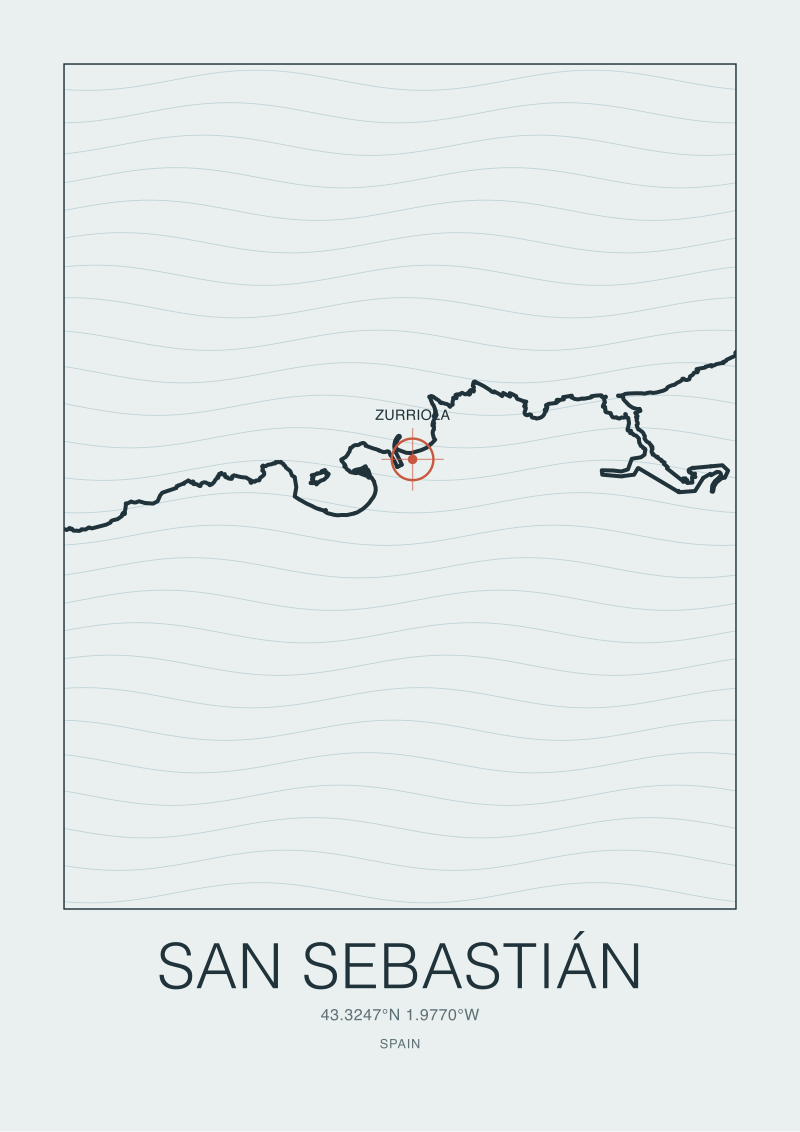
La Zurriola is one beach with several personalities, and San Sebastián's old town does not tell you which one is out today. So instead of a linear guide, we are going to route you through it as a flowchart in prose. Three questions, each with a Yes and a No branch, each branch pointing to a concrete way to spend your time on the Gros side of the Urumea river mouth. At the end, a table collapses the eight possible answer combinations into eight one-line recommendations. The coordinates we are working from are 43.3267° N, 1.9729° W — the beach itself, drawn from OpenStreetMap coastline data.
Question 1: Have You Surfed a Beach Break in the Bay of Biscay Before?
This is the first fork because the Bay of Biscay is not a generic Atlantic. It is a semi-enclosed basin bounded by the northern coast of Spain and the western coast of France, and the swells that reach Zurriola have often travelled across deep water before meeting a shore that turns sharply at the Basque corner. That corner concentrates energy. A wave that looks manageable from the Paseo Nuevo can be doing something quite specific by the time it stands up over Zurriola's sandbars — walling faster than a similarly sized wave elsewhere, closing out further from the beach, or reforming inside in a way that ambushes a surfer paddling back out.
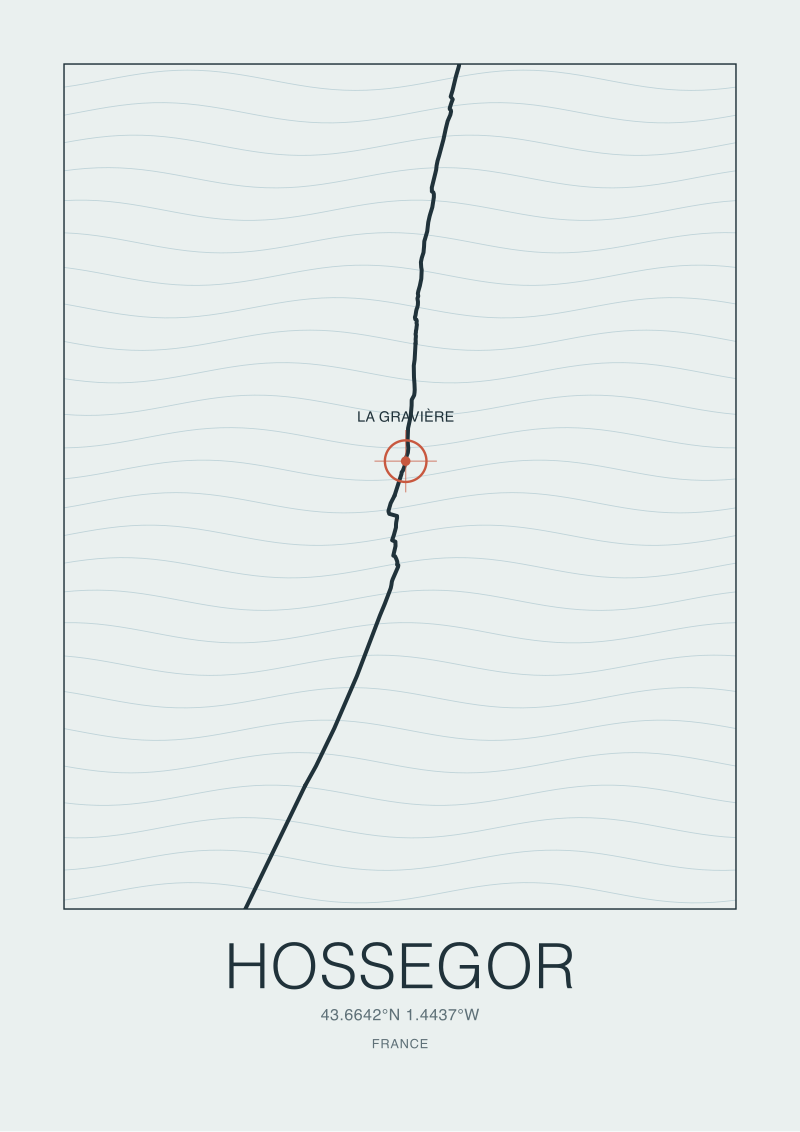
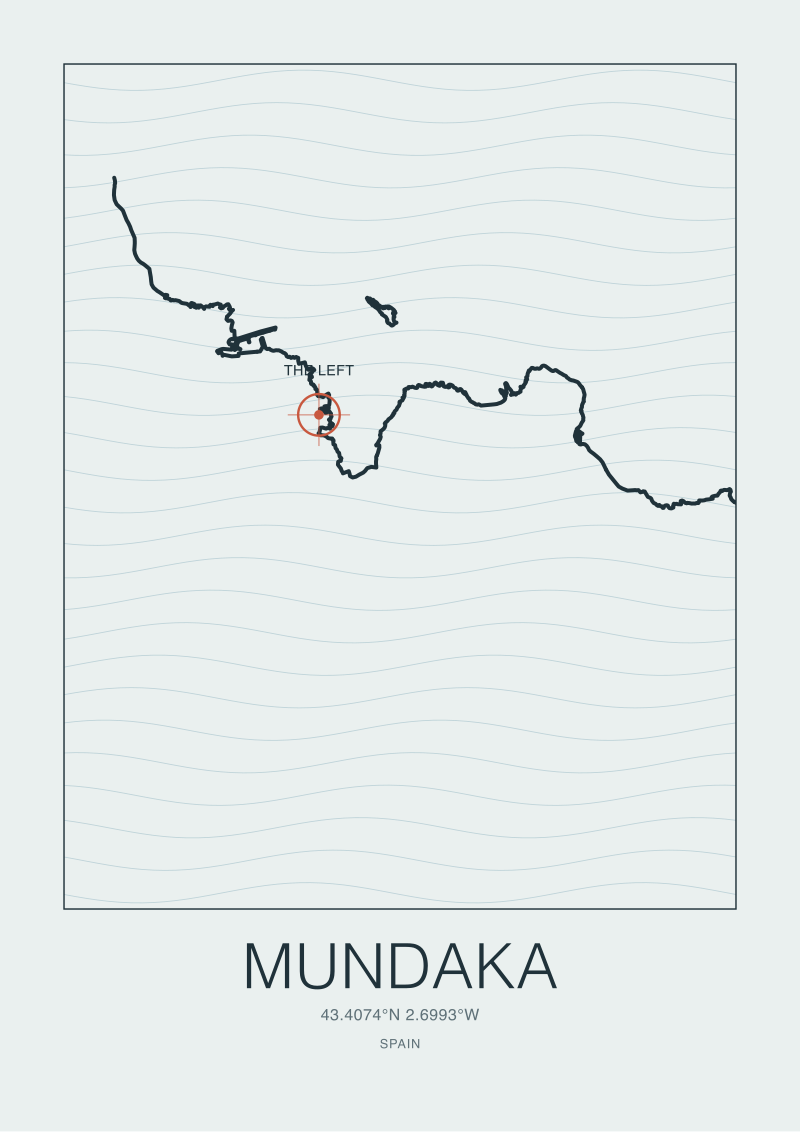
The question matters because Zurriola is a beach break, not a reef, and beach breaks reward pattern recognition more than they reward technique. If you have already read Biscay sand — at Hossegor, at Mundaka's sandbar days, at Zarautz down the coast — the shape of Zurriola's peaks will be legible on arrival. If you have not, the first hour is spent learning the room rather than surfing it.
If Yes
Go straight to the eastern end of the beach, near the Sagüés end where the sea wall meets the sand. This is the side where the bathymetry tends to concentrate the cleaner peaks, and it is where the local pack sits when conditions are on. You are looking for the sandbar arrangement first, the wind direction second, and the peak spacing third. Paddle out during a lull and post up outside the main takeoff zone for ten minutes before catching anything. You will see whether the bank is producing lefts, rights, or A-frames, and you will see how far inside the reforms are landing. Then move.
If No
Start at the western end, closer to the Kursaal cubes and the Urumea river mouth. The sand tends to be less organised there, which sounds like a bad thing and is actually the right thing for a first Biscay session. Smaller, mushier walls, more room between surfers, a shorter paddle if you get caught inside. Rent a board from one of the beachfront schools on Paseo de la Zurriola rather than bringing your own — they will match a volume to your weight and will tell you honestly whether the current is running strong. Give yourself two sessions here before you consider walking east toward the peaks the locals are on.
Question 2: Are You Here for a Single Session or a Full Day on the Sand?
This second fork is about time, not skill. San Sebastián is a city with a coastline attached, not the other way around, and the mistake most visitors make is treating Zurriola the way they would treat a surf-camp beach — as a self-contained day. It is not. It sits between the Old Town on one side and the Ulía headland on the other, and the Gros neighbourhood behind it is one of the most interesting eating and walking districts in the north of Spain. Deciding whether you are here for a session or a day changes what you pack, where you park, and whether you eat before or after.
The question also matters for tides. Zurriola is tide-sensitive in the way most beach breaks are: the sandbars work at some tide phases and close out at others, and the workable window can be as short as ninety minutes. If you are here for a session, you plan around that window. If you are here for a day, the window is one activity among several.
If Yes — Single Session
Arrive ninety minutes before your chosen tide, park in the underground lot at Plaza de Cataluña or use the bike lane along the Paseo, and get in the water within thirty minutes of stepping onto the sand. Take one board, one wetsuit, and one towel. Eat afterwards, not before — a pintxo bar in Gros will still be open. Do not attempt to combine the session with a visit to the Old Town on the same afternoon; the walk across the Zurriola bridge is short in metres and long in temptation, and you will not surf the second window.
If No — Full Day
Bring the board but treat it as one of three or four things you are doing. Start with a walk up the Paseo Nuevo around the base of Monte Urgull, which gives you a read on the swell direction from above before you commit. Then a coffee in Gros, then the session at whichever tide phase matches your skill level, then a long lunch. The Ulía headland walk in the afternoon is optional but useful — it puts the shape of the coast in your head, which will make your next session read faster. This is the shape of a good day in San Sebastián: the surf is the spine, not the whole body.
 San Sebastián
The print from this article · from €29.95
View the print →
San Sebastián
The print from this article · from €29.95
View the print →
Question 3: Do You Want to Read the Beach Yourself, or Follow a Local?
The final fork is temperamental. Some people want to arrive at a beach, watch it for an hour, and form their own opinion about where to paddle out. Other people want the shortcut — a person who already knows the bank, the tide, and the crowd dynamics, and who will simply point. Both are legitimate. Neither is better. But they lead to different mornings in Gros, and choosing in advance saves the awkwardness of hovering between the two.
Reading a beach yourself is a real skill and it is faster to acquire at Zurriola than at more variable breaks, because the beach is short — about eight hundred metres of sand between the river mouth and the Sagüés rocks — and the peaks tend to organise into two or three distinct zones on most days. An hour of watching from the Paseo, with a coffee, will teach you most of what you need. Following a local skips the hour and buys you a peak you would probably have missed.
If Yes — Read It Yourself
Get a coffee at one of the cafés on Calle Zabaleta or Calle Bermingham, sit on the sea wall, and watch the beach for a full sixty minutes before you touch a board. Note where the sets are breaking hardest, where the surfers are sitting versus where the waves are actually landing (these often differ), and where the rip currents are running — you will see them as darker channels of water with no whitewater on top. Then walk the length of the sand once, board under arm, before choosing an entry point. This method costs you an hour and returns a much better session than the alternative of paddling out at the first plausible peak.
If No — Follow a Local
Book with one of the surf schools that operate directly on Paseo de la Zurriola — Pukas, Hokala, and several smaller Basque-run outfits have long-established shopfronts along the beachfront road. Ask for a guided session rather than a beginner lesson if you already know how to surf; most schools offer this and it is priced as a shorter, more expensive slot. The instructor will read the bank for you, position you in the right zone, and translate the crowd etiquette. Two or three of these across a trip will teach you the beach faster than a week of solo sessions.
If You Answered Everything: The Routing Table
Eight combinations, eight recommendations. Read across your three answers and land on the row that matches.
| Q1 (Biscay experience) | Q2 (Single session or full day) | Q3 (Read it yourself or follow a local) | Recommendation |
|---|---|---|---|
| Yes | Session | Yourself | Sagüés end, one tide window, coffee-and-watch first, then paddle straight to the main peak. |
| Yes | Session | Local | Book a guided session at Sagüés end; you get the peak the pack knows without the hour of reading. |
| Yes | Day | Yourself | Paseo Nuevo walk, coffee in Gros, read the bank yourself, session mid-day, Ulía in the afternoon. |
| Yes | Day | Local | Guided session mid-day, then eat and walk Ulía; use the local's read to plan tomorrow's solo session. |
| No | Session | Yourself | Western end near the Kursaal, mid-tide, rent a bigger board, keep the session short and observational. |
| No | Session | Local | Beginner or improver lesson with a Paseo de la Zurriola school; do not try to freesurf yet. |
| No | Day | Yourself | Half-day on shore first — walk, watch, read — then a short late-afternoon rental session at the western end. |
| No | Day | Local | Morning lesson, afternoon walk on Ulía or through the Old Town, evening pintxos in Gros, no second session. |
The routing is directional, not prescriptive. Conditions on any given day will bend it — a strong easterly wind can move the workable peak from Sagüés to the middle of the beach, a very low tide can close the whole bank out and route everyone to the schools' foam-board zone at the western end. What the table protects against is the more common failure mode, which is arriving at Zurriola without a plan and paddling out at whichever peak looks busiest, on the assumption that the crowd knows.
A coastline read as geography — the Urumea river carving one edge, the Sagüés rocks anchoring the other, the whole beach set between two headlands that shape how the swell arrives — is a coastline you can navigate before your feet are wet. San Sebastián deserves that read. It is not just a break; it is a shore drawn by a river, a bay, and a city that has been looking at both for a very long time. If you carry one of our Basque coast prints home, this is the beach on it — the eight hundred metres of Gros sand between the Kursaal and the Sagüés wall, at /shop/.
 Hossegor
The print from this article · from €29.95
View the print →
Hossegor
The print from this article · from €29.95
View the print →
FAQ
Where exactly is La Zurriola in San Sebastián?
La Zurriola is the beach on the eastern side of the Urumea river mouth, in the Gros neighbourhood of San Sebastián. The coordinates we work from are 43.3267° N, 1.9729° W, drawn from OpenStreetMap coastline data. It sits between the Kursaal congress centre at the river mouth and the Sagüés rocks under the Ulía headland, roughly eight hundred metres of continuous sand facing north toward the Bay of Biscay.
How is Zurriola different from La Concha, the other San Sebastián beach?
La Concha is a sheltered bay beach on the western side of the city, protected by Santa Clara island and two headlands; it rarely gets surf worth paddling for. La Zurriola faces the open Bay of Biscay with almost no shelter and is exposed to the same north and northwest swells that reach Hossegor and Mundaka. Practically speaking, La Concha is for swimming and walking. Zurriola is where you surf.
Do I need to bring my own board or can I rent one there?
You can rent on the beachfront. Multiple schools and shops operate along Paseo de la Zurriola with rental boards ranging from foam beginner boards to shortboards and mid-lengths. If you are travelling to San Sebastián specifically to surf for several days, bringing your own board pays off. If you are here for a session or two as part of a wider trip, renting is faster and avoids the airline surcharge on board bags.
What time of year works for surfing La Zurriola?
Autumn and winter produce the most consistent swell in the Bay of Biscay, so September through March is the traditional surf season. Summer sees smaller and less consistent waves but warmer water and easier crowds. The trade-off is straightforward: winter has the waves and requires a full wetsuit, hood and booties on the coldest days; summer has the atmosphere and often has just enough surf for a manageable session.
Is Zurriola a beginner beach?
It can be, at the right end and the right tide, with a school. The western end near the Urumea river mouth is where the schools run beginner lessons and where a first-time surfer will have room and forgiving whitewater. The eastern end near Sagüés is not a beginner zone — the peaks are punchier, the pack is more competent, and dropping in there without the skill to hold your position creates problems for other surfers.
How crowded does the beach get?
Zurriola is one of the most consistent urban surf beaches in northern Spain, and on a good day with clean conditions it holds a substantial crowd. The peaks organise the crowd more than the sand does — most of the pack sits where the current sandbar is producing, which concentrates people into two or three zones rather than spreading them evenly. Weekday mornings before nine and weekday evenings after six are consistently less crowded than weekend middays.
What about the Ulía headland — is it worth walking?
Yes, especially before or after a session. The Ulía walk starts at the Sagüés end of Zurriola and climbs the headland east of the beach, giving overhead views of the sandbars and of the swell lines arriving from the north. It is the fastest way to build a mental map of how Zurriola is shaped and why it breaks the way it does. On a day when the surf is too big or too messy to paddle, it is a good substitute for the session you were not going to have anyway.
New breaks and 10% off your first print.
One email now with your code. No noise after.