A World Surfing Reserve is not a beach club, not a marine park, and not a promise that a wave will still be there in fifty years. It is a paperwork instrument — a coalition, a dossier, a stewardship council, a defined polygon on a map — that gives a coastline the vocabulary to defend itself. You do not need to be a competitive surfer to read a coast this way. You need nine or ten terms. This is those terms, in the order they matter.
World Surfing Reserve
A World Surfing Reserve is a geographic designation, granted by the Save the Waves Coalition, that formally identifies a stretch of coast as globally significant for its waves, its ecology, its cultural weight, and its vulnerability. It is not a national park. It is not, in most jurisdictions, a statutory protected area with its own enforcement powers. It is a coordinated framework — accreditation, governance and documentation — that makes a coast legible to the people who write zoning ordinances and permit marinas. That legibility is the point. When a highway extension threatens to reroute runoff into a bay, "we love this wave" is a public comment; a reserve status is a formal case file. Ericeira, on Portugal's central Atlantic coast at roughly 38.96°N, was ratified as a World Surfing Reserve in October 2011 — the first in Europe. The designation covers a defined polygon of shoreline that includes Ribeira d'Ilhas, the anchor break of the town.
The Save The Waves Coalition
The Save the Waves Coalition is the California-registered non-profit that runs the World Surfing Reserves programme, along with two related instruments: the Endangered Waves alert system and the Surfonomics economic-valuation methodology. Inside the reserves programme, Save the Waves is the accreditor, not the enforcer. The coalition evaluates nomination dossiers, coordinates the technical review, and organises the dedication ceremony with local partners. It does not station rangers, issue fines, or hold statutory authority anywhere in the world. Its power is entirely reputational and procedural: a Save the Waves ratification is a credential a local stewardship council can carry into a municipal planning meeting and lay on the table. Since the programme's first dedication in 2010, the coalition has ratified fewer than fifteen reserves globally. The scarcity is deliberate. If every well-loved wave earned a designation, the designation would carry no weight in a permit hearing.
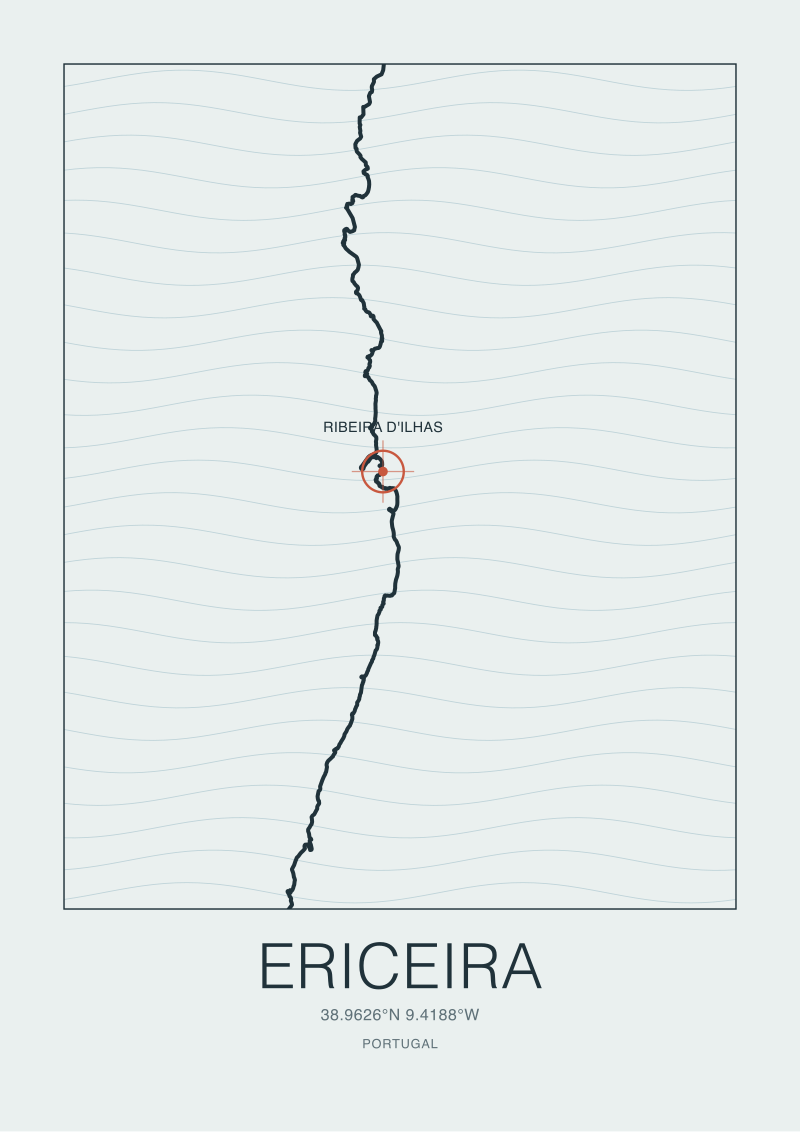 Ericeira
The print from this article · from €29.95
View the print →
Ericeira
The print from this article · from €29.95
View the print →
The Nomination Dossier
The nomination dossier is the formal application document a local stewardship group submits to Save the Waves to open the evaluation process. It runs to dozens of pages and covers, at minimum, five sections: wave-quality and consistency analysis, ecological inventory (species, habitats, water-quality baselines), cultural and historical documentation of the coast's relationship with surfing, a threat assessment naming the specific pressures the reserve would address, and letters of support from municipal government, community organisations, and named individual stakeholders. The dossier is not a marketing pitch. It is a discovery document, and it becomes the reference file the stewardship council will cite for decades. Ericeira's dossier documented the coastline from Praia de São Lourenço in the north to Praia da Empa in the south — a stretch that concentrates several distinct surf breaks within roughly four kilometres of shore, including the reef of Ribeira d'Ilhas.
The Vision Council
The Vision Council is the technical body inside Save the Waves that carries out the substantive review of nomination dossiers. It is composed of surfers, marine scientists, coastal-management professionals, and figures with standing in the international surf community. The council reviews the dossier against the four wave-quality criteria and against the ecological, cultural and threat sections, then issues a recommendation for the coalition's board to act on. This structure is why the reserve programme is not, in practice, a popularity contest: a coast can have significant public support behind a nomination and still not clear technical review. Conversely, a dossier that clears technical review carries substantially more weight in a subsequent municipal planning hearing precisely because it has been evaluated by named specialists rather than declared meaningful by acclamation. The Vision Council's role is the reason "ratified reserve" is a credential rather than a slogan.
The Local Stewardship Council
The local stewardship council is the volunteer body — local surfers, municipal officials, marine biologists, small-business owners, sometimes fisheries representatives — that governs the reserve on the ground. This is the structural feature that most distinguishes a World Surfing Reserve from other coastal-protection instruments. Save the Waves does not run the reserve from California. The council does, from the coast itself. The design reasoning is straightforward: the threats to any given reserve are almost always local — a proposed port, a housing block, a wastewater outflow, a diverted river — and the responders need to be present, informed, and politically credible in the municipality involved. Ericeira's council coordinates with the Mafra municipality and Portuguese coastal-management authorities. When a specific threat is filed to the register, the council convenes, drafts a public position, and engages the relevant permit process. The reserve exists because that council keeps existing.
The Dedication Ceremony
The dedication ceremony is the public ratification event at which reserve status is formally conferred. It is theatre and instrument at the same time. On the ceremonial side, the mayor speaks, Save the Waves representatives read the citation, and the stewardship council is introduced by name to the community. On the instrumental side, the ceremony creates a public record: signed proclamations, municipal-council resolutions, and a dated document trail that becomes admissible in future planning disputes. A wave without a dedication has enthusiasm behind it; a wave with a dedication has a paper trail behind it. Ericeira's dedication took place in October 2011 at Ribeira d'Ilhas, with the mayor of Mafra, members of the Save the Waves board, and representatives of the Portuguese surfing federation present. That event is why "Ericeira, since 2011" appears in every subsequent reference to the reserve.
The Coastal Buffer Zone
The coastal buffer zone is the geographic footprint the reserve designation actually covers, defined as a bounded polygon on a map rather than a general area of the coast. Without a defined perimeter, "protecting a wave" is an emotional statement, not an enforceable one. The buffer is the map, and the map is the enforcement surface. The stewardship council uses the polygon to determine whether a specific proposed activity — a marina, a wastewater plant, a road realignment, an aggregate-extraction license — falls inside the reserve and therefore inside the council's formal remit for public comment. Ericeira's reserve boundary encloses roughly four kilometres of Atlantic coastline centred on the town, including several documented surf breaks. A development three kilometres inland is outside the polygon. A proposed harbour extension at the north end of the buffer is inside it. That distinction is legally consequential.
Wave Quality Criteria
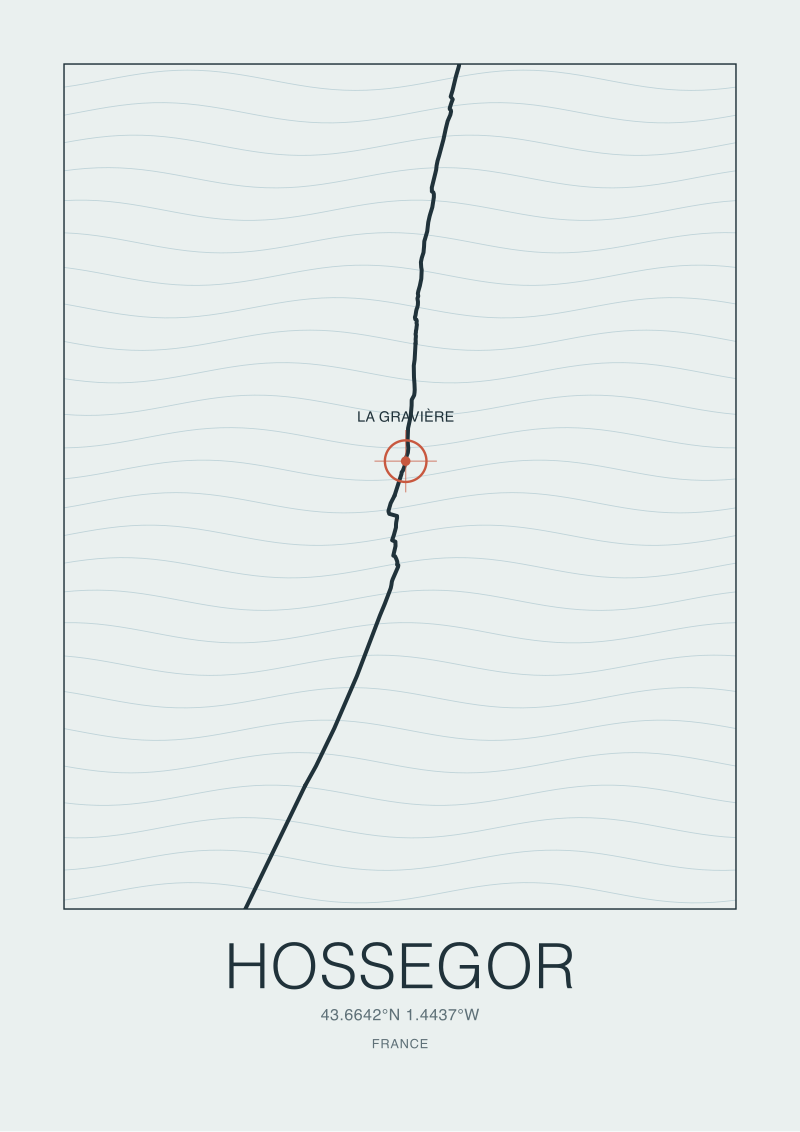
Wave quality criteria are the technical rubric the Vision Council uses to evaluate whether a coast's waves warrant designation. Four categories carry most of the weight: consistency (does the coast produce ridable waves reliably across seasons), quality (are the waves genuinely notable in a global sense rather than merely locally beloved), uniqueness (is there a geomorphic or hydrographic feature that makes this coast distinct), and vulnerability (is the coast under identifiable threat that reserve status would help address). All four matter. Ribeira d'Ilhas, the anchor break inside the Ericeira reserve, is a right-hand reef break that works across a wide range of Atlantic swells arriving at Portugal's central coast — the consistency and quality criteria are met without argument. Hossegor's La Gravière, on the French coast just north of Biarritz, meets consistency and quality on the same scale but is not a World Surfing Reserve. Uniqueness and vulnerability are the harder tests.
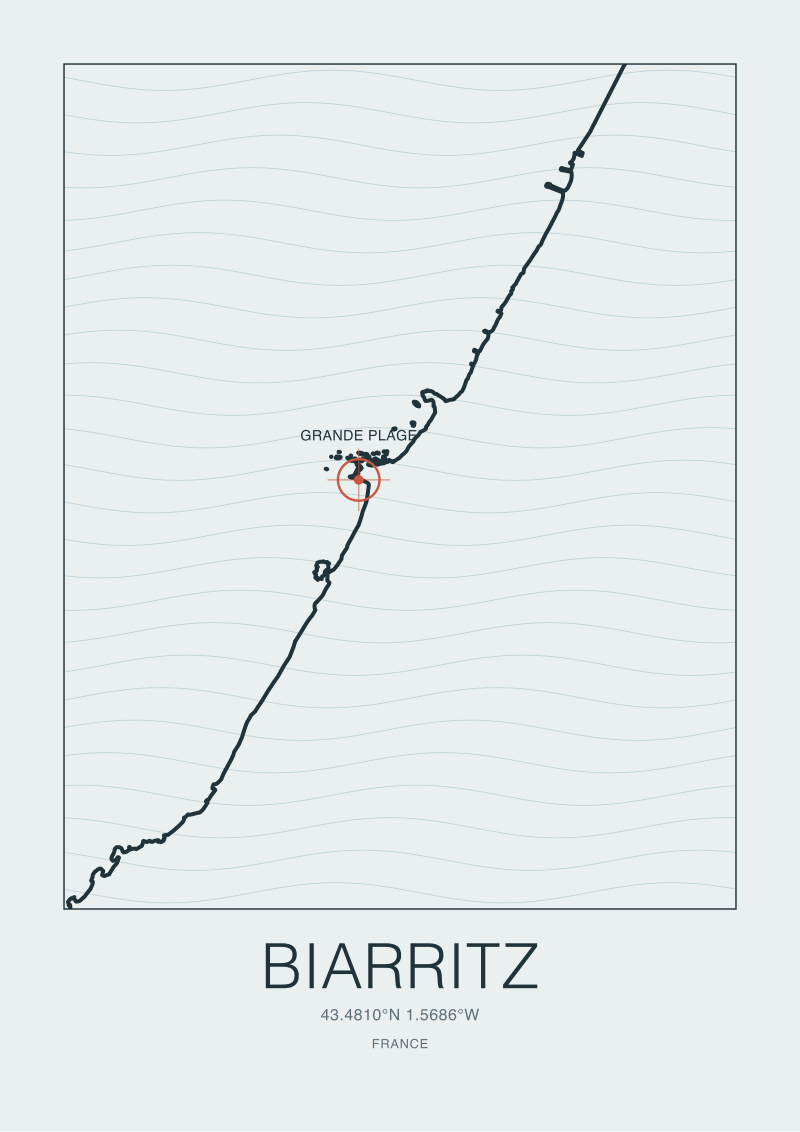 Biarritz
The print from this article · from €29.95
View the print →
Biarritz
The print from this article · from €29.95
View the print →
The Environmental Threat Register
The environmental threat register is the catalogue of documented risks to the reserve — the concrete list of what the designation is defending against. Typical entries include coastal-development pressure, industrial or wastewater discharge, climate-driven erosion, aggregate extraction offshore, and any activity likely to alter bathymetry or water quality inside the buffer zone. The register is not written once and filed. It is a living document, updated by the stewardship council as pressures shift, and reviewed on a defined cycle rather than only after crises. Its function is dual: it is the accountability instrument that keeps the council doing work between incidents, and it is the reference the council will point to when a specific new threat appears. Ericeira's register has cited urban-development pressure driven by Lisbon commuter growth and water-quality issues linked to municipal drainage. The register is the reason "protecting the reserve" translates into specific actions rather than vague intent.
The Global Reserve Network
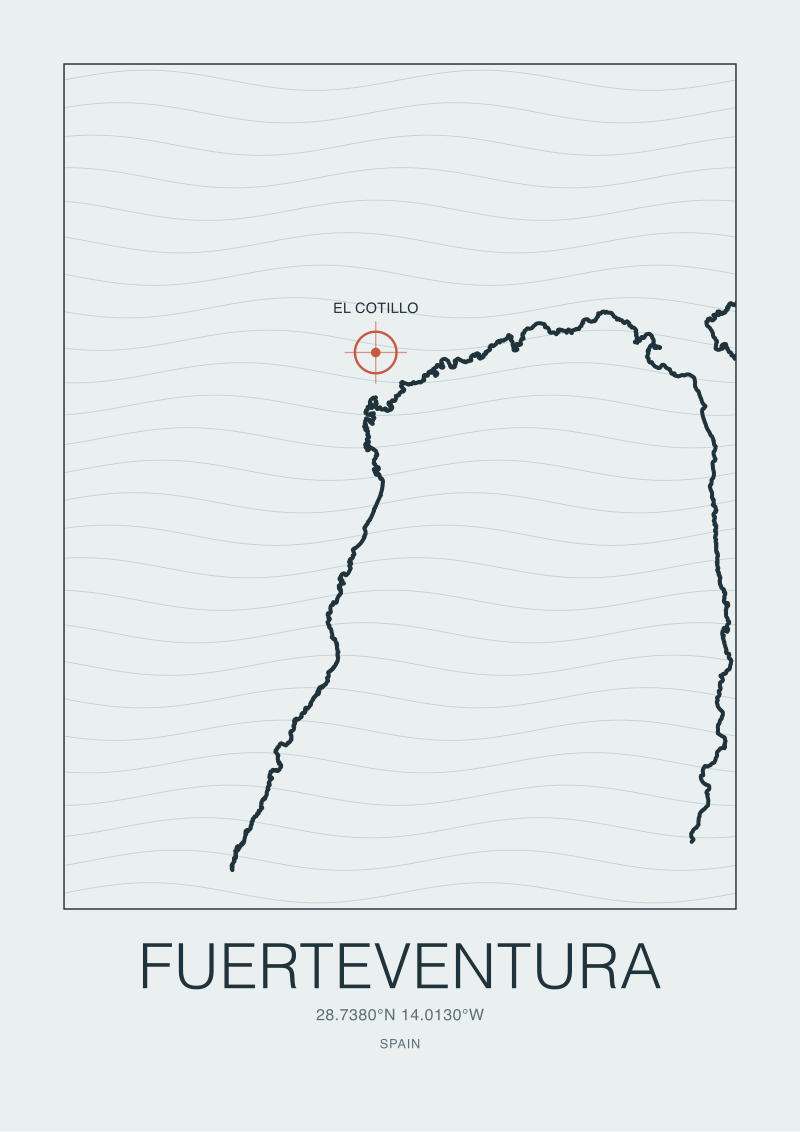
The global reserve network is the full set of ratified World Surfing Reserves, treated by Save the Waves as a comparative dataset rather than a trophy list. As of the mid-2020s, that set includes Malibu (California, dedicated 2010), Ericeira (Portugal, 2011, the first in Europe), Manly and Noosa and Gold Coast (Australia), Huanchaco (Peru), Punta de Lobos (Chile), Guarda do Embaú (Brazil), Bahía de Todos Santos (Mexico), and a small number of others. Coasts of obvious surf significance — Biarritz on the French Basque coast, where European surf culture arrived in 1957; El Cotillo and the northern shore of Fuerteventura in the Canaries — are not in the network. Absence is not a verdict on quality. It is a reminder that the designation is deliberately scarce, that vulnerability is part of the test, and that a wave without a stewardship council behind it cannot become a reserve.
FAQ
Is a World Surfing Reserve a legally protected area?
Not directly. In most jurisdictions, WSR status is a designation conferred by the Save the Waves Coalition, not a statutory protected area under national coastal law. It carries no independent enforcement authority. Its effect is procedural and political: it establishes a formal case file, a named local stewardship council, and a documented buffer zone that municipal governments and permit authorities can cite. Where the coast already sits inside a national protected area, the two instruments run in parallel.
Who actually manages a World Surfing Reserve day to day?
The local stewardship council does — a volunteer body of local surfers, municipal officials, marine biologists, and community stakeholders convened at the time of dedication. Save the Waves accredits the reserve and provides programme support from California but does not run individual reserves. This design is intentional. Threats to a given coast are almost always local — a proposed port, a housing development, a discharge — and responses need to come from people credible inside the relevant municipality.
What does a coast have to demonstrate to qualify?
A coast must clear four criteria in the review process: consistency of ridable waves across seasons, quality that is notable at a global rather than local scale, geomorphic or hydrographic uniqueness, and identifiable vulnerability the reserve status would help address. A coast that is only excellent, without also being distinct and threatened, does not pass. The full evaluation happens on the basis of a formal nomination dossier submitted by a local stewardship group.
Which coast was the first World Surfing Reserve in Europe?
Ericeira, on Portugal's central Atlantic coast, was dedicated in October 2011. The reserve boundary encloses roughly four kilometres of coast centred on the town and includes several documented surf breaks, of which Ribeira d'Ilhas is the anchor. Ericeira was the first WSR outside the Americas and Australia, and it remains one of the more studied cases in the network for how a small municipality manages a designation of this kind in the face of commuter-belt development pressure.
What actually happens when a specific threat to a reserve is identified?
The stewardship council convenes to draft a formal position, files public comment in the relevant municipal or national permit process, and often engages Save the Waves for technical and communications support. The environmental threat register is updated to log the incident and the response. Because the reserve boundary is a defined polygon, the council can determine unambiguously whether a proposed activity is inside its remit and act accordingly, rather than argue jurisdiction.
Can a reserve be delisted or lose its status?
Save the Waves has not built the programme around routine revocation, but reserves are expected to remain governed by an active stewardship council and to keep the threat register current. In principle, a reserve where the local governance structure collapsed, or where the coast was so degraded that the underlying wave quality was lost, could be reconsidered. In practice, the model is designed for the opposite outcome: continuity of local governance across decades.
How is a World Surfing Reserve different from a Marine Protected Area?
A Marine Protected Area is a statutory designation under national or international law, with defined enforcement mechanisms — often restrictions on fishing, extraction, or vessel activity. A World Surfing Reserve is a programme-level accreditation focused specifically on surf-relevant coastline attributes: wave quality, break integrity, and the cultural and ecological setting around them. The two can overlap on the same coast without conflict. In some cases, a WSR designation has been a precursor to broader statutory protection.
New breaks and 10% off your first print.
One email now with your code. No noise after.