Three questions decide it. "Portugal is Europe's surf capital" moves through travel features and streaming documentaries with the confidence of a settled fact. It isn't one. It's an answer that depends on which question you actually asked. What follows is a flowchart in prose — three yes-or-no questions, and the coastline the map ends up pointing to when you answer them.
Question 1: Is Your Definition Anchored in Wave Geography, Not Cultural History?
The "surf capital" label is asked to do two very different jobs. One is geographic — which coast produces the most consistent, most varied, most notable waves. The other is historical — which coast holds the founding stories, the first clubs, the cultural centre of gravity. Portugal has a strong case in the first frame. It has a much thinner case in the second. So the answer changes depending on which frame you started with, and most travel writing quietly picks the frame for you.
If Yes
Portugal's Atlantic shelf is the honest lead. The Portuguese coast faces open ocean with no continental shelf softening the arrival — swell reaches the shore with its shape mostly intact. Ericeira concentrates that geometry: Ribeira d'Ilhas at 38.9626°N, -9.4188°E sits on a headland whose reef and sand configurations hold form across different swell directions. Further north, Nazaré's story is a seafloor story — an underwater canyon funnels and steepens open-Atlantic energy toward the coast, which is why the town's waves are documented as unusual rather than folkloric. If you asked a wave-geography question, Portugal is the strongest single answer in Europe.
If No
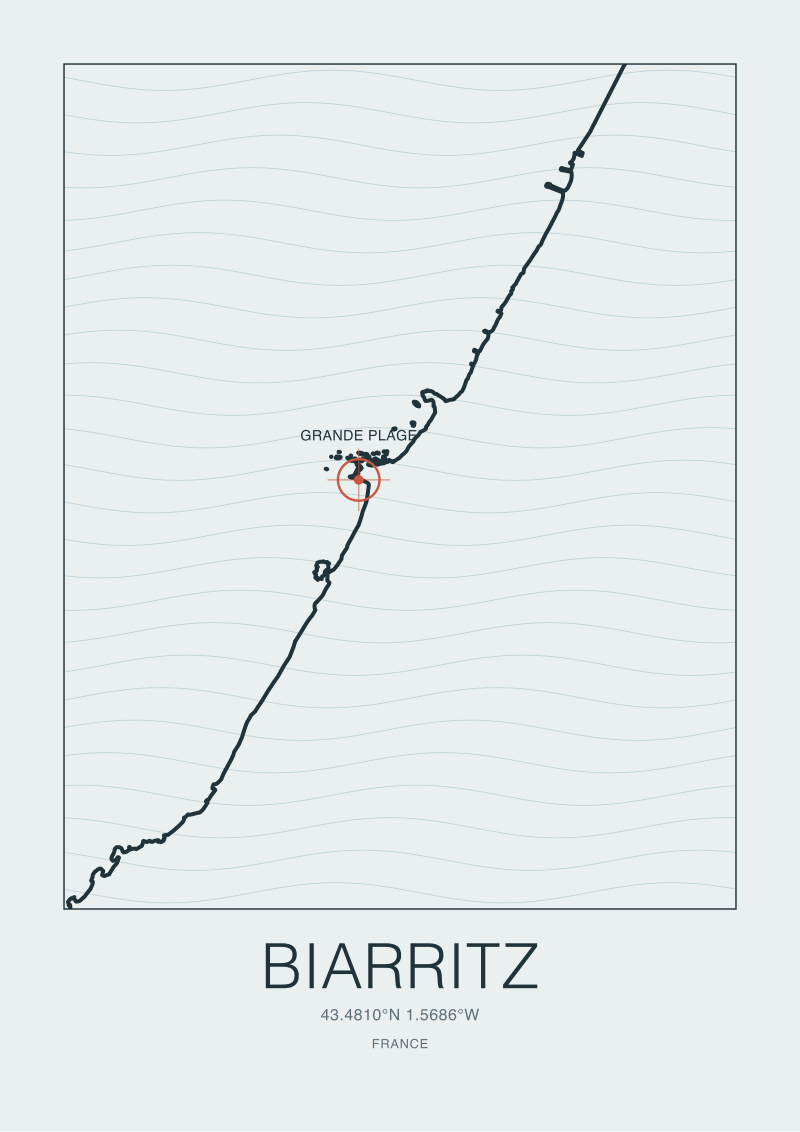
Then the honest answer is Biarritz, and it has been since 1957. That is the year the modern European surf story starts on the Grande Plage — the coordinate is 43.481°N, -1.5686°E, and the culture radiates outward from there. Every French surf club with a claim, every Basque family board-shaping lineage, every early European contest circuit runs through that town. Portugal built a modern identity fast; France built the founding one, and the founding one still weighs the most in the cultural framing.
Question 2: Are You Weighting the Last Twenty Years More Than the Sixty Before Them?
This is the second fork, and it decides more than people admit. If your reference points are Nazaré on video, the Ericeira Reserve designation in 2011, the World Surf League returning to Portugal year after year — your window is roughly two decades. If your reference points are the French clubs of the late 1950s and 1960s, the Basque board-shaping lineage, the first European championship circuit — your window is a lifetime longer.
If Yes
Portugal takes the recent window cleanly. Ericeira was designated the world's second World Surfing Reserve in 2011 — a status that protects the coastal geography around Ribeira d'Ilhas and the surrounding reefs from development, not the "vibe". Nazaré's global profile is a post-2010 phenomenon. If you are reading "capital" as "where the story has been for the last twenty years", the map points to the Portuguese Atlantic.
If No
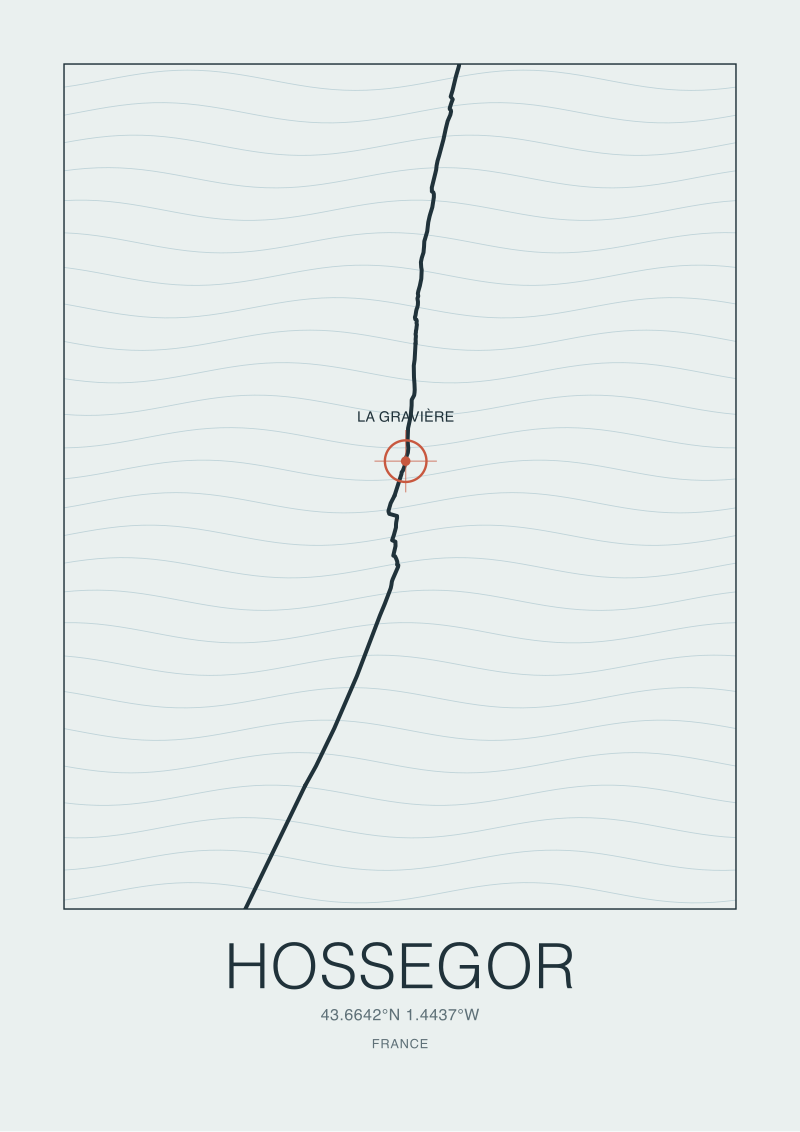
The French Basque and Landes coast holds. Sixty years of continuous cultural weight is not overtaken in twenty. Biarritz and Hossegor form the historical spine: La Gravière at 43.6642°N, -1.4437°E is the reference beach break in Europe for a reason the archive supports and the recent noise doesn't erase. Portugal is a chapter. France is the book that chapter sits in.
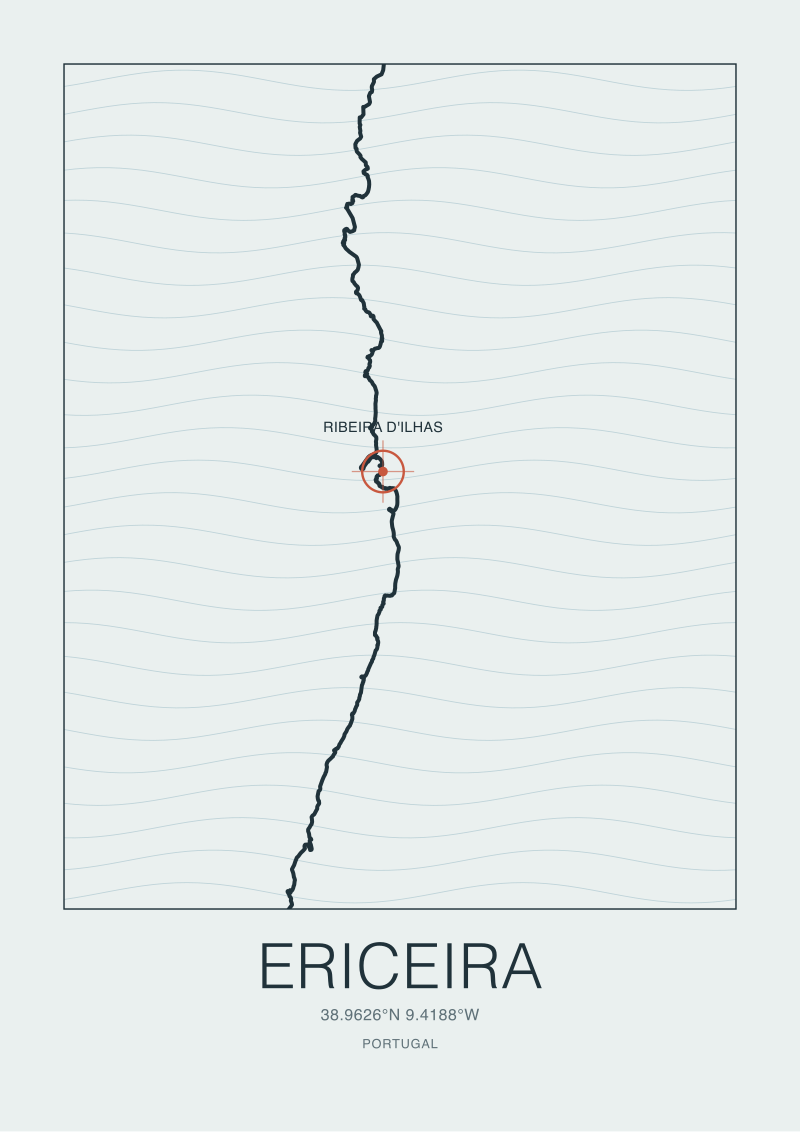 Ericeira
The print from this article · from €29.95
View the print →
Ericeira
The print from this article · from €29.95
View the print →
Question 3: Do You Want Your Capital to Be One Concentrated Place, or a Coastline?
Cities have capitals. Coastlines don't. This is the fork that quietly breaks the whole question, because "capital" is a political-geography word and surf is a coastal-geography phenomenon. When you name a "surf capital", you are compressing an arc of shore into a single label — a lossy compression that always favours the town with the biggest media profile over the coastline doing the actual geographic work.
If Yes
Concentration wants a town. Ericeira is the answer if concentration is your criterion — a small municipality whose Reserve status gathers reef breaks, beach breaks, and cultural infrastructure into a single walkable coast. If you need a pin on the map, this is the honest pin.
If No
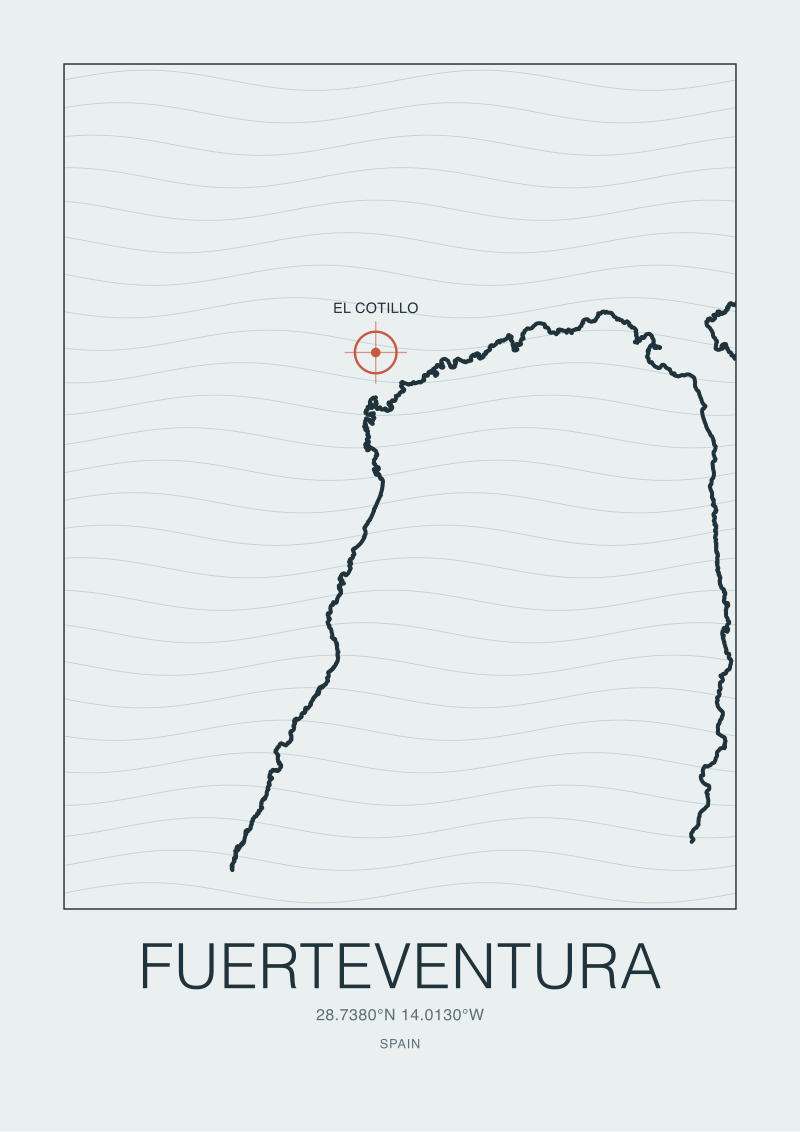
Then the "capital" framing itself is wrong, and the more accurate answer is a stretch of coastline rather than a town. The French Basque-to-Landes arc from Biarritz through Hossegor is one such stretch. The Portuguese Atlantic from Peniche through Ericeira is another. Fuerteventura's north-west coast, anchored around El Cotillo at 28.738°N, -14.013°E, is a third — a volcanic coastline whose exposure to North Atlantic swell wraps around the island's geometry rather than concentrating in a single headland. The reader who rejects concentration is really asking to see the shore, not the label.
If You Answered Everything
| Q1: Geography, not history? | Q2: Recent over long arc? | Q3: Concentration over coastline? | Recommendation |
|---|---|---|---|
| Yes | Yes | Yes | Ericeira. Geography-first, modern-era, single concentrated coast — the strongest reading of the "Portugal is Europe's capital" case. |
| Yes | Yes | No | The Portuguese Atlantic stretch through Peniche, Ericeira, and Nazaré — the capital here is a coastline, not a town. |
| Yes | No | Yes | Hossegor. Wave geography read across decades still names La Gravière as the concentrated European reference break. |
| Yes | No | No | The French Basque-to-Landes coast from Biarritz to Hossegor — geography over the long arc lives here, not in Portugal. |
| No | Yes | Yes | Ericeira again, but for cultural weight — the 2011 Reserve status anchored a modern identity in one town. |
| No | Yes | No | The Portuguese coast broadly — recent cultural weight is spread across it more than it concentrates. |
| No | No | Yes | Biarritz. Culture-first, long arc, single town — 1957 remains the founding coordinate of European surf. |
| No | No | No | The French Atlantic broadly — a sixty-year cultural arc is a coast, not a capital. |
Read the table honestly and something obvious falls out: the coordinate flips between Portugal and France depending entirely on which frame you started with. There is no neutral "capital". There is a question you asked, and a coastline the answer routes you to. The travel headline that skipped Question 1 is not describing the coast — it is describing an editorial choice.
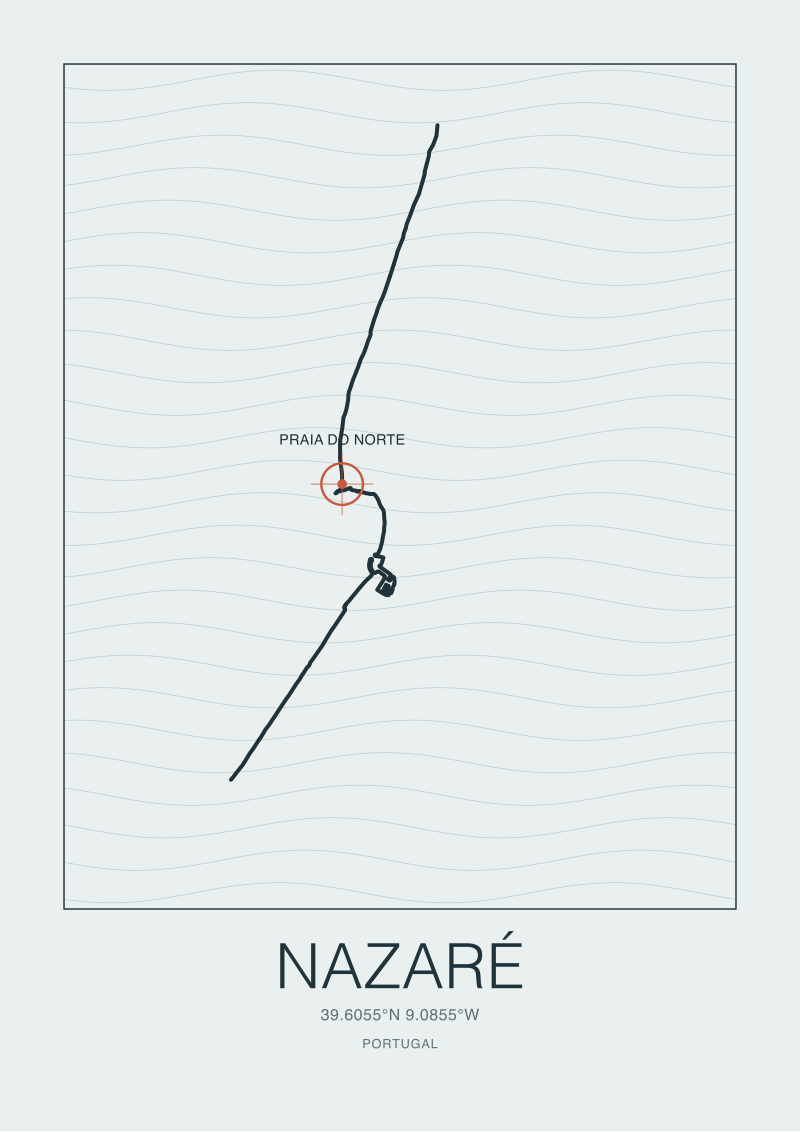 Nazaré
The print from this article · from €29.95
View the print →
Nazaré
The print from this article · from €29.95
View the print →
Signals to Watch
If you want to update your view over time, watch four observable things — not opinions, indicators.
One: whether the Ericeira World Surfing Reserve boundary is expanded, contracted, or defended against new coastal development. Reserve status is a legal geography, not a marketing one, and its map is public.
Two: where the World Surf League Championship Tour actually holds its European stop each year. Portugal has hosted the modern era. If the calendar drifts north to France or south to the Canaries, the cultural centre is moving with it.
Three: which coastlines the coastal-erosion and bathymetry literature is actively studying. Wave geography changes when sandbars and headlands change. The Landes coast trench system off Hossegor and the Nazaré Canyon are both active research subjects; when their papers update, the "capital" story updates with them.
Four: how the Basque and Landes clubs frame their own history in official communications. Cultural authority is a claim that has to be maintained; when the historical framing thins, the label follows.
At Salt & Swell we draw these coastlines from real map data — Ericeira's Ribeira d'Ilhas headland, Hossegor's La Gravière trenches, Biarritz's Grande Plage, Fuerteventura's El Cotillo — because the shape of the shore is the argument. The prints are in the /shop/.
FAQ
Is calling Portugal "Europe's surf capital" factually wrong?
It isn't wrong; it's underspecified. The claim is true under a specific set of framings — geography over history, recent decades over the long arc, concentration over coastline — and false under others. The honest version of the sentence includes the frame. Without it, the phrase carries the weight of a fact while doing the work of an editorial choice. That is the pattern to watch across travel writing generally, not only about Portugal.
Why does Ericeira keep coming up as the specific town rather than Nazaré or Peniche?
Ericeira concentrates a rare combination in a small municipality: a Reserve-designated coastline, multiple break types within a short coastal walk of each other, and a cultural infrastructure that is coast-facing rather than resort-facing. Nazaré is one break with one canyon-driven story. Peniche is primarily a competition venue. Ericeira is the case where the geography and the culture sit inside the same postal code, which is why "capital"-shaped questions land there.
What did Ericeira's World Surfing Reserve status in 2011 actually change?
The Reserve designation protects the coastal geography — the reefs, the headlands, the specific coastal zone around Ribeira d'Ilhas — from development that would alter how waves break there. It does not certify a "vibe" or grant a cultural rank. Its value is legal and geographic: the coast that produced the waves is protected from being paved into something that would stop producing them. That is a stronger, narrower claim than most tourism copy makes for it.
Doesn't Nazaré settle the question on its own?
Nazaré settles a narrower question: where an open-Atlantic swell gets funneled by an underwater canyon into unusually steep waves at a specific stretch of coast. That is a real geographic phenomenon, well documented in bathymetry data. It doesn't make the surrounding country a "capital" any more than a single peak makes a country a mountaineering capital. Nazaré is a coordinate. A capital is a claim.
Where does France's Biarritz-to-Hossegor stretch actually beat Portugal?
On two frames: the long historical arc (Biarritz 1957 remains the founding European coordinate) and the concentrated wave-geography case for a single reference beach break (La Gravière at 43.6642°N, -1.4437°E). If your framing weights either of those, the answer walks north to France regardless of how loud the Portugal story is in current media.
Why include Fuerteventura in a question about the Atlantic mainland?
Because "European" is not the same as "European mainland". Fuerteventura sits in Spanish waters and takes North Atlantic swell wrapping around a volcanic coastline — El Cotillo at 28.738°N, -14.013°E is the reference. Any honest map of European surf coasts includes the archipelagos; excluding them is a mainland bias, not a geographic one. Whether the archipelagos hold a "capital" claim is another question, but leaving them off the map answers it dishonestly.
What would actually change the answer over the next decade?
Three things, in decreasing order of decisiveness: a shift in where the Championship Tour holds its European stop; a change in coastal-protection boundaries around either the Ericeira Reserve or the French Landes zone; and any bathymetry update that revises what we know about the Nazaré Canyon or the Landes trench system. None of these are predictions. They are the observable indicators that would move the answer, and they are the ones worth reading if the question matters to you.
From the collection
New breaks and 10% off your first print.
One email now with your code. No noise after.